
The Origin of Swiss German
One of my students recently asked me:
"I heard Swiss German is called 'Bauerndeutsch' (Farmer's German). Is that true?"
I realized that many people have heard this claim—but very few know where it actually comes from.
So I grabbed a cup of coffee and started digging into the history.
THE ORIGIN OF SWISS GERMAN: WHY PEOPLE CALL IT "BAUERNDEUTSCH"
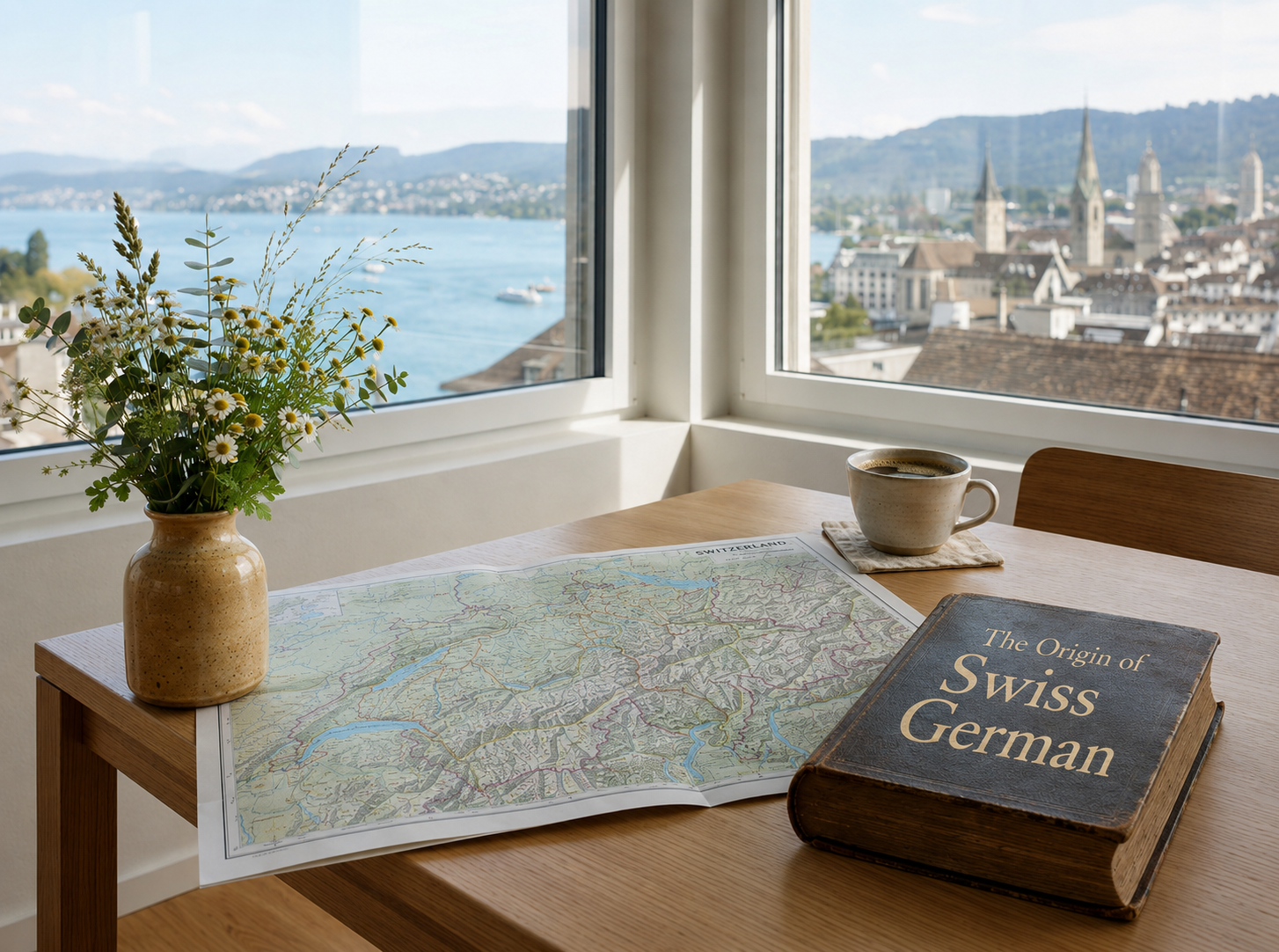
One of my students recently asked me:
"I heard Swiss German is called 'Bauerndeutsch' (Farmer's German). Is that true?"
I realized that many people have heard this claim—but very few know where it actually comes from.
So I grabbed a cup of coffee and started digging into the history.
Here’s what I found…
Why Is Swiss German Sometimes Called "Bauerndeutsch"?
If you're learning German or planning to move to Switzerland, you've probably heard someone jokingly refer to Swiss German as "Bauerndeutsch" (farmer's German). But where does this nickname come from? Is it true, or is it simply a stereotype?
Let's explore the fascinating history behind it.
First Things First: Swiss German Isn't "Broken German"
One of the biggest misconceptions is that Swiss German is simply incorrect German.
I admit—it sounds charming, but it's certainly not broken.
Swiss German has preserved a number of words, pronunciations, and grammatical features that reflect older stages of the German language and are no longer found in Standard German.
So if you've ever struggled to understand Swiss German, don't worry—it's not because it's "wrong." It's because Swiss German has developed differently over the centuries and belongs to a group of Alemannic dialects with a rich history of its own.
Imagine a tree. Its roots are hidden beneath the ground, yet they are what give it strength and shape. Swiss German is a bit like those roots. Its history stretches back more than 1,500 years, and much of that story lies beneath the surface of the language we hear today.
If you're curious to explore those roots in more depth, the Swiss Academy of Humanities and Social Sciences (SAGW) offers fascinating insights into the history and development of Swiss German.
So Why "Bauerndeutsch"?
The answer lies in history
Rumours spread fast. Some people hear that Swiss German is just "broken German" or a "farmer's language" and never question it.
But the real story is far more fascinating. Once you learn where Swiss German actually comes from, you'll probably smile—and maybe even look at the language in a completely different way.
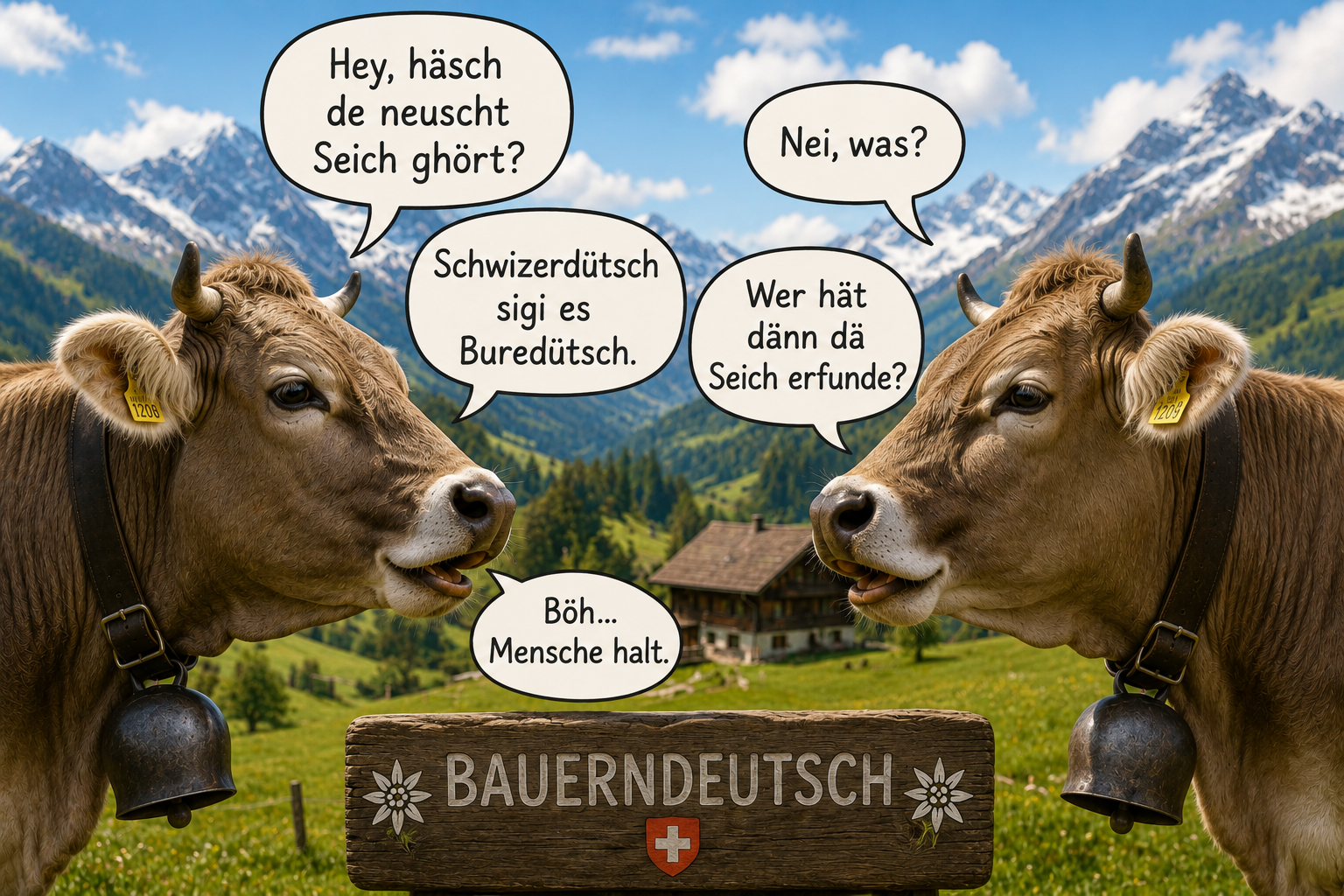
Here's how two Swiss cows might react to the idea that Swiss German is just "farmer's German." Translation of the conversation:
"Hey, have you heard the latest nonsense?" "No, what?" "They're saying Swiss German should be the farmer's German" "Who came up with that nonsense?" "I have no clue... Humans, I guess."
"Hey, have you heard the latest nonsense?" "No, what?" "They're saying Swiss German should be the farmer's German" "Who came up with that nonsense?" "I have no clue... Humans, I guess."
So… as already mentioned, the answer lies in history. After Martin Luther's Bible translation helped establish Standard German in the 16th century, Germany gradually adopted it as the language of education, literature, government, and public life.
Over time, many regional dialects became associated with villages and farming communities. As cities grew, speaking Standard German often became a sign of education and social prestige. Switzerland took a very different path.
Switzerland Never Gave Up Its Dialects
While Germans increasingly switched to Standard German in everyday life, Switzerland continued speaking its regional dialects.
Today you'll hear Swiss German almost everywhere:
At work
In cafés
On television
At family dinners
In politics
Among doctors, lawyers, teachers, and business leaders
Standard German is still used in Switzerland for writing, formal documents, books, and much of education, but everyday conversation remains firmly rooted in Swiss German.
A Cultural Difference
This difference explains the stereotype. Because dialects in Germany were historically associated with rural areas, some Germans viewed Swiss German through the same lens and jokingly called it "Bauerndeutsch."
However, this says more about historical attitudes than about the language itself. In Switzerland, speaking dialect has never meant someone is less educated. Quite the opposite—it often reflects regional identity, authenticity, and pride.
Is Swiss German One Language?
Not exactly. Swiss German is an umbrella term for many different dialects.
Someone from Zurich sounds different from someone from Bern, even though both dialects belong to the High Alemannic group, which is the largest dialect group in Switzerland. One of my closest friends is from Bern, and whenever we meet, we always end up debating which words are "correct" or which dialect sounds better.
Someone from Bern also sounds quite different from someone from Basel or St. Gallen, and the differences continue across the country.
Some dialects are so distinct that even Swiss people occasionally ask each other to repeat what they just said! People from Valais are jokingly said to be from another planet because, to many of us, their dialect doesn't just sound different—it can sound like an entirely different language.
That's one of the many reasons Swiss German is such a fascinating language to learn!
Final Thoughts
Calling Swiss German "Bauerndeutsch" is an old stereotype that doesn't reflect reality ;)
Swiss German has a rich history, unique vocabulary, and a strong place in Swiss culture. It isn't "incorrect" German—it simply developed differently.
If you're learning German for life in Switzerland, understanding both Standard German and Swiss German will give you a much deeper appreciation of the country's language and culture.
Want to Learn Swiss German?
Have you ever wished you could understand what people are really saying in cafés, shops, or at the local market? Or maybe you'd love to chat with your neighbours in Swiss German instead of always switching to Standard German or English.
Learning Swiss German can make everyday life much easier—and much more enjoyable.
I'd love to help you on that journey. I grew up and still live in Zurich, so I teach Züri-Dütsch (Zurich Swiss German), one of the Swiss German dialects that's generally considered easier for German speakers to understand. Whether you're starting from scratch or already speak German (then you know the basics), I'll help you gain the confidence to understand—and speak—the Swiss German you hear every day in and around Zurich.